Loading...
SermonAI
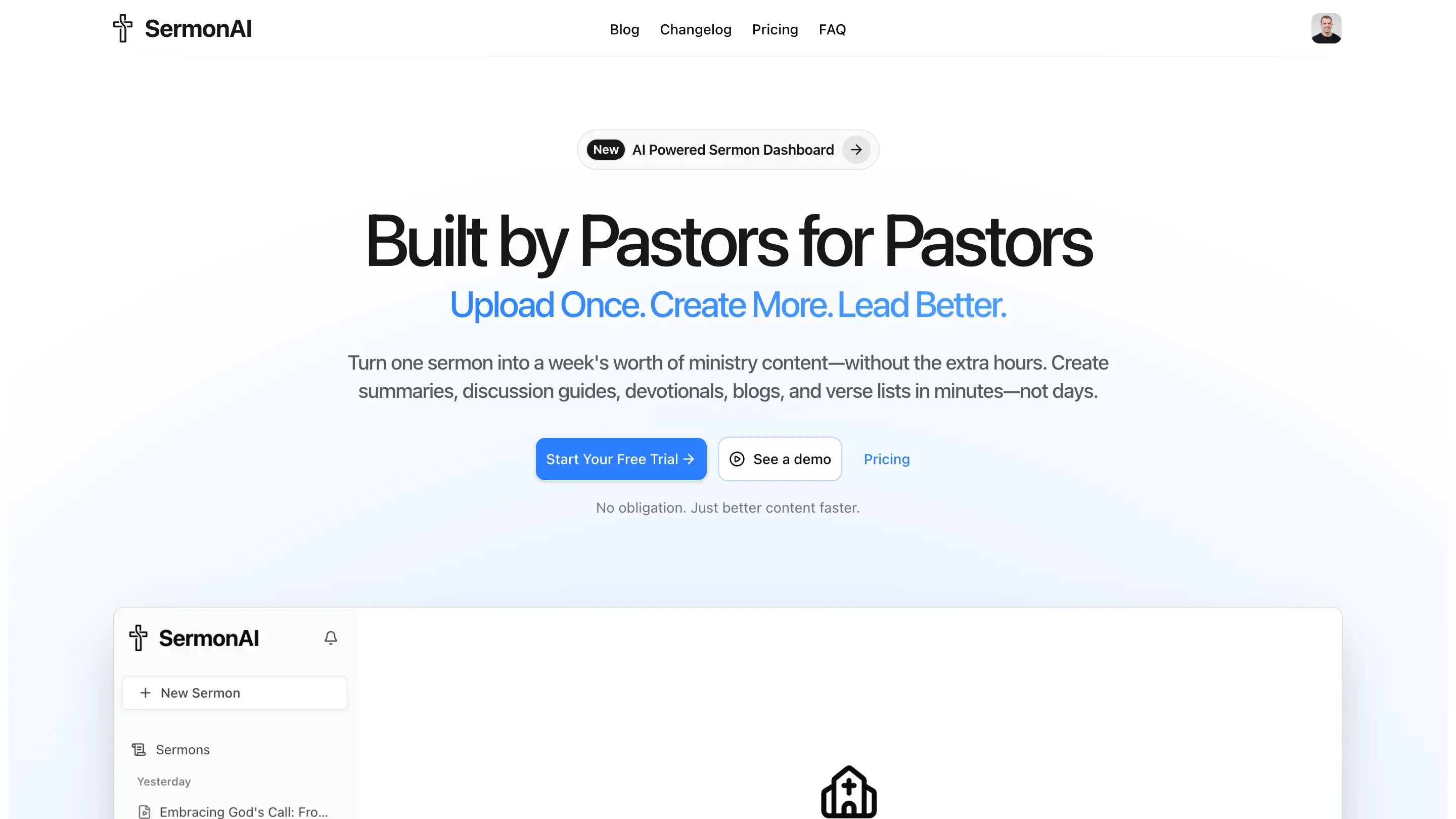
AI-powered sermon workflow for pastors: turn one message into summaries, discussion guides, devotionals, blog posts, and verse lists—without outsourcing your voice.
7 hrs
Saved per week
5
Content types generated
1
Upload to start
2026
Live product
Project Overview
The Challenge
Ministry leaders repeat the same demanding loop: prepare Sunday, then spin up small-group questions, newsletter copy, devotions, and web content—often late at night. The product needed to respect theological voice, stay simple for non-technical teams, and ship as a credible SaaS—not a demo.
- • Reliable intake from YouTube, uploads, and manuscripts
- • Transcription and structured generation without a fragile chain of manual tools
- • Multi-output packaging (core content, blog, devotionals) with edit and export
- • Accounts, teams, and subscriptions appropriate for churches
- • Marketing and in-app experience that builds trust on privacy and clarity
- • Internationalized surfaces where the product roadmap calls for it
My Role & Impact
I led product UX and full-stack implementation on a production Next.js app built on a Makerkit-style monorepo: sermon APIs, Supabase-backed data, Stripe billing, admin and team flows, and the public marketing experience. The work was about shipping a cohesive loop—from upload to reviewable outputs—that real pastors could adopt in a weekly rhythm.
Product & UX
Full-stack delivery
AI pipeline design
Supabase & RLS patterns
Stripe billing
Marketing site
next-intl
Deepgram & OpenAI integration
Technology Stack
Design & Development Process
1
Problem framing & architecture
Grounded the workflow in how pastors actually produce content, then mapped it onto App Router routes, Supabase-backed persistence, and dedicated API handlers for transcription and generation—so failures are contained and the UI stays honest about progress.
- • User journeys for upload, YouTube, and manuscript paths
- • Boundary between marketing site, authenticated app, and admin
- • API design for sermon processing and retries
2
Workflow UX & output review
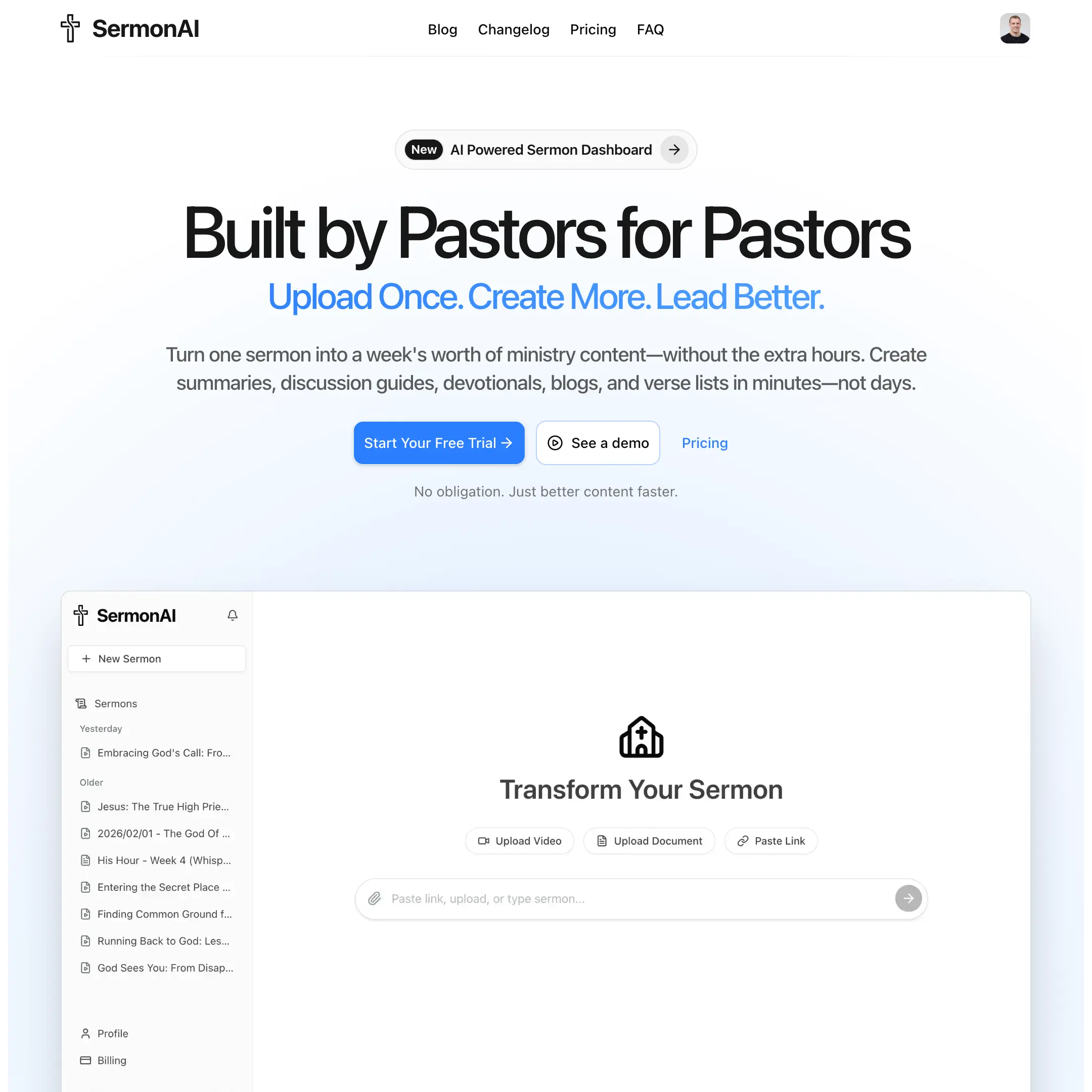
Designed the core loop so teams always land in a reviewable state: structured tabs for summary, questions, verses, blog, and devotions, with editing and export paths that match how churches publish week to week.
- • Step-by-step upload and generation affordances
- • Rich text review tuned for ministry tone
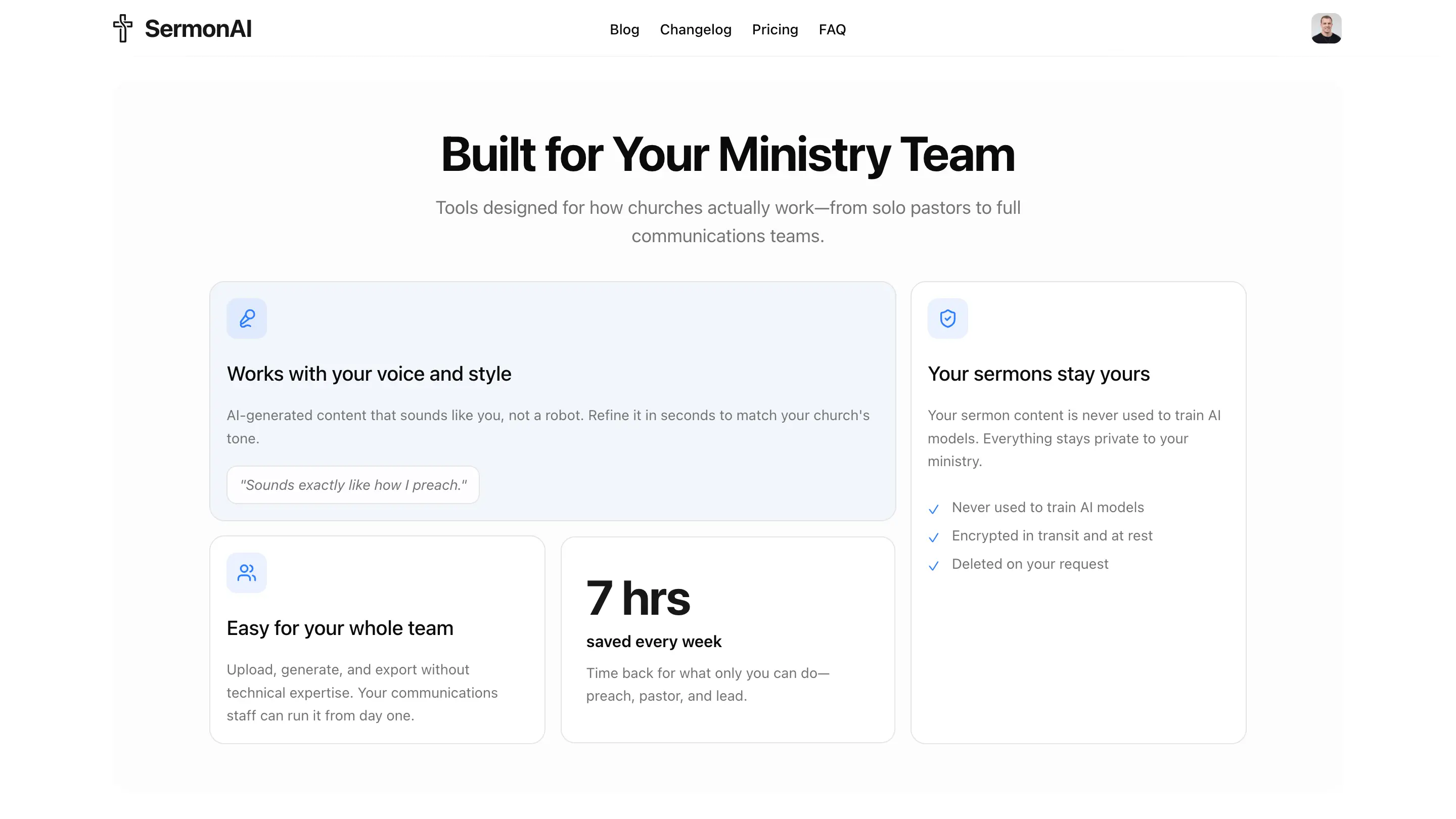
- • Clear trust copy on data use and exports
3
Shipped MVP & SaaS foundation
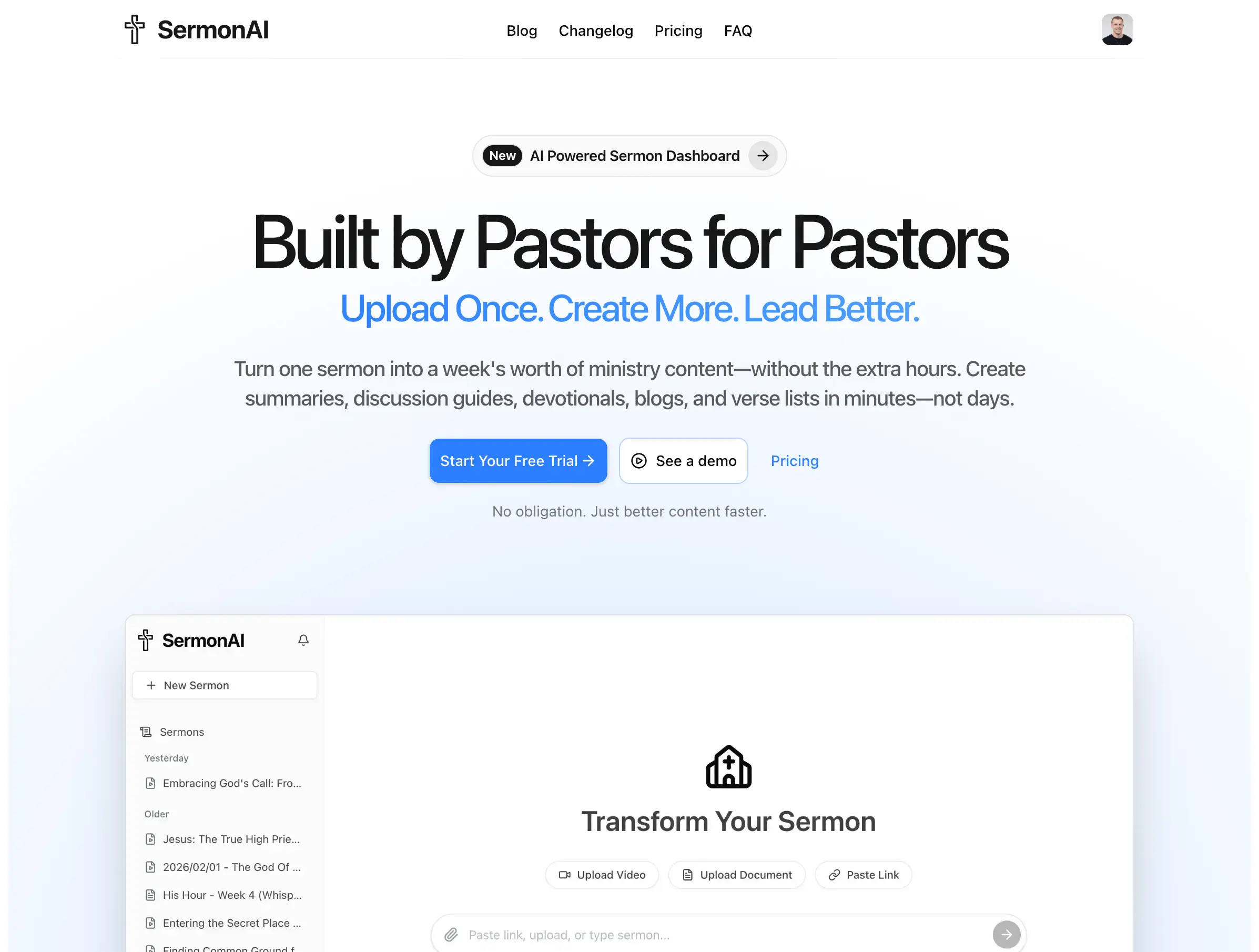
Delivered the live loop end to end: transcription and generation routes, subscription checkout patterns, team account navigation, and the marketing story that matches the in-app product—so new users see one coherent SermonAI.
- • Production APIs wired to Deepgram and OpenAI
- • Billing and account flows on Stripe
- • Ongoing iteration on admin, quotas, and reliability
Key Features
Flexible sermon intake
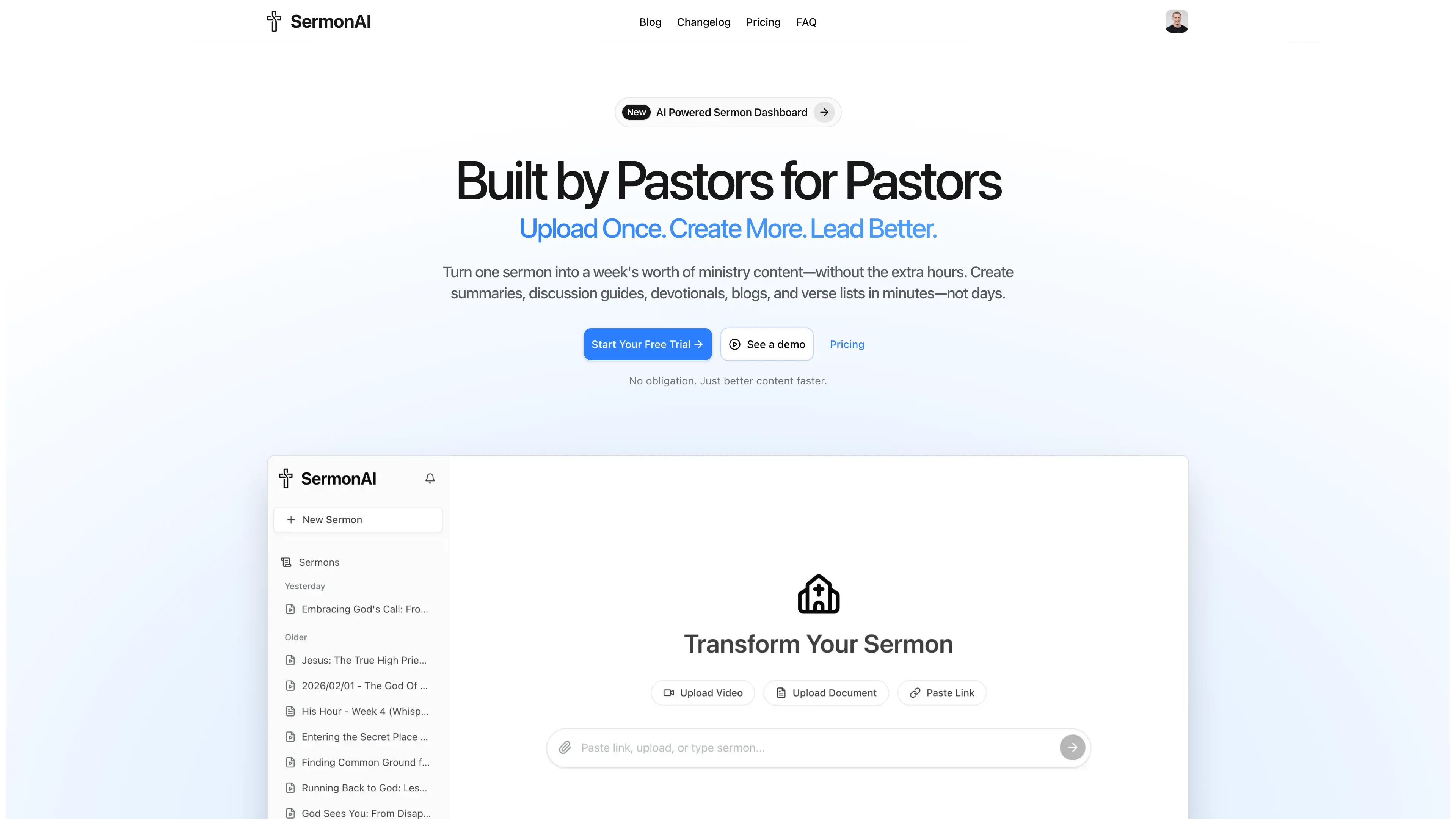
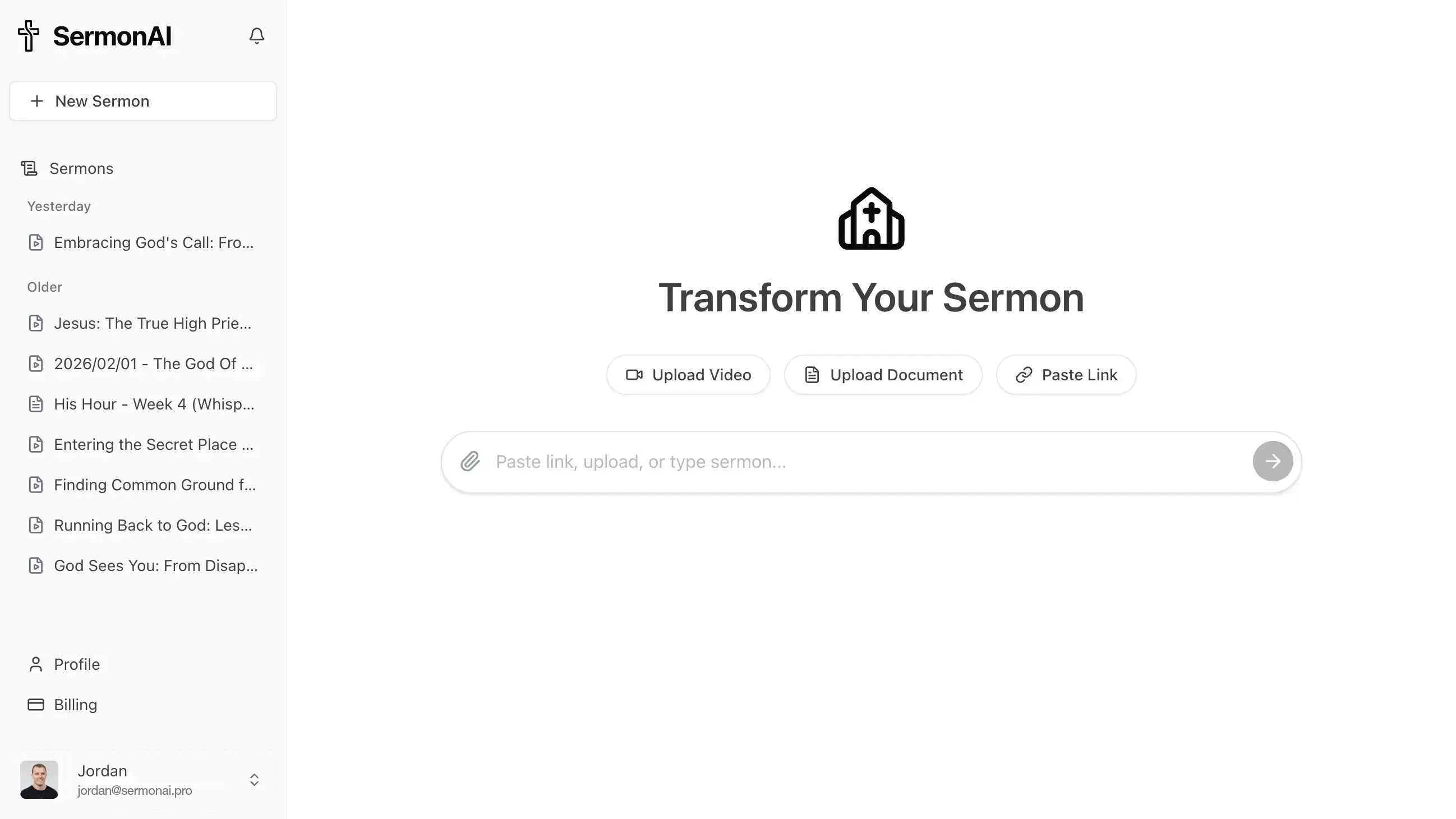
Upload audio or video, paste a YouTube link, or bring a manuscript—matched to how pastors already prepare.
Transcription and generation pipeline
Server-side flows from media to text, then structured AI outputs with review before teams share anything.
One sermon, many ministry-ready outputs
Summaries, discussion questions, verse lists, website-ready articles, and multi-day devotionals from a single source.
Built for real church teams
Team workspaces, billing, and a privacy stance that keeps sermon content oriented to the ministry—not generic AI filler.
Results & Impact
Product & ministry value
- One upload feeding five ministry-ready outputs
- Positioning grounded in time reclaimed for pastors and clarity for teams
- Trust narrative: sermon content stays oriented to the customer’s ministry
- Live SaaS with trial and subscription path for recurring use
Technical foundations
- Dedicated transcription and generation API routes with clear separation of concerns
- Supabase-backed app data with typed client generation and webhook hooks where needed
- Stripe-integrated billing and team account patterns from a maintained monorepo baseline
- Localized marketing and product strings via next-intl
SermonAI is the kind of product I like shipping: a narrow, painful weekly problem, a humane UX for non-developers, and a backend honest enough to run as a real business—not a slideshow.
Ready to Build Something Amazing?
This case study is a slice of how I approach production SaaS: clear problem, disciplined architecture, and UX that earns trust. If that matches what you need next, let’s talk.